
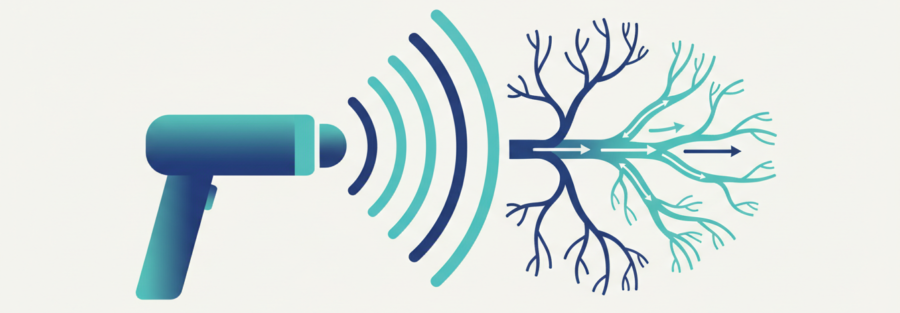
Shockwave Therapy for Erectile Dysfunction: Does It Really Work?
Low-intensity extracorporeal shockwave therapy (LI-ESWT) is a genuine, evidence-based treatment for mild-to-moderate vasculogenic erectile dysfunction. Multiple randomised trials and meta-analyses show meaningful improvement in IIEF-5 scores in roughly 60–75% of well-selected patients, with results appearing after 6–12 weeks and lasting 1–2 years or longer in responders. It is not a cure for every cause of ED, particularly severe organic or post-prostatectomy cases, and it requires the right protocol and device to work.
Shockwave therapy is one of the few treatments in male sexual medicine that generates equal amounts of enthusiasm and scepticism. Marketed under names like GAINSWave, Renova, and Storz DUOLITH, it promises to “regenerate” penile blood flow without drugs, injections, or surgery. Some clinics claim near-miraculous results; others dismiss it as an expensive placebo.
The truth sits in between. The technology is real, the mechanism is sound, and the evidence for well-selected patients is genuinely encouraging. But the technique is protocol-sensitive, the device matters, and the wrong candidate will pay for six sessions with nothing to show for it. This article covers what LI-ESWT actually is, who benefits, who does not, what a proper protocol looks like at our Istanbul clinic, and how it compares with PRP, exosomes and stem-cell therapy.
Key takeaways
- LI-ESWT delivers focused low-energy acoustic waves that stimulate neovascularisation in penile tissue.
- Best evidence supports use in mild-to-moderate vasculogenic ED; less effective in severe organic or nerve-damage ED.
- A typical protocol is 6–12 sessions over 4–6 weeks, with results appearing at 6–12 weeks.
- Response rate in appropriately selected patients is roughly 60–75%, with effects durable for 1–2 years.
- Combining ESWT with PRP or exosomes may enhance outcomes in resistant cases.
What is LI-ESWT?
Low-intensity extracorporeal shockwave therapy uses focused acoustic pressure waves at roughly one tenth the energy of the shockwaves used to break kidney stones. The waves are delivered through a handheld probe placed on the shaft and crura of the penis, without incision, anaesthesia or downtime.
Regenerative medicine adds a further tier: stem cell therapy for erectile dysfunction.
The therapy was first applied to the penis around 2010 by Vardi and colleagues in Israel. Since then it has become one of the most studied non-pharmacological ED treatments, with dozens of randomised trials and multiple meta-analyses. In Europe, LI-ESWT is included as a treatment option in the EAU guidelines for mild vasculogenic ED, with the caveat that device settings and protocols vary widely.
The science: how shockwaves regenerate erectile tissue
The proposed mechanism is a controlled micro-injury that triggers three biological responses:
The newer, cell-free regenerative sibling of stem cell work is exosome therapy for erectile dysfunction.
- Neovascularisation — release of vascular endothelial growth factor (VEGF) and other angiogenic signals that stimulate new blood-vessel formation in the corpora cavernosa
- Endothelial repair — recruitment of endothelial progenitor cells that restore the ability of penile arteries to release nitric oxide
- Smooth muscle regeneration — increased expression of nerve growth factor and reduced fibrosis
In animal models these changes are visible on histology after 3–4 weeks. In humans the clinical effect appears at 6–12 weeks, matching the timeline for new capillary networks to mature.
Who is the ideal candidate?
The men who respond best to LI-ESWT share a specific profile:
Anatomical length or girth is a separate procedure — details on our penis enlargement surgery page.
- Mild to moderate ED (IIEF-5 score 12–21)
- Vasculogenic origin — arterial insufficiency confirmed on Doppler
- Ongoing response to PDE5 inhibitors but wanting to reduce dependence
- Age typically 40–65
- No advanced cavernosal fibrosis
- No prior radical prostatectomy or spinal-cord injury (weaker response)
A man who ticks these boxes has roughly a 70% chance of a meaningful improvement. A man with severe organic ED, complete non-response to sildenafil, or nerve-damage ED after prostate surgery has closer to a 30–40% chance, and needs a more realistic conversation before starting.
Who should NOT use ESWT?
Absolute or relative contraindications include:
- Active penile infection or open lesion
- Coagulation disorder or anticoagulant therapy (relative)
- Penile prosthesis in place
- Severe Peyronie’s disease with active inflammation
- Genital malignancy
- Complete post-prostatectomy nerve loss (limited benefit, not dangerous)
Session protocol at Androaesthe Istanbul
Different devices use different energy levels and pulse counts. Our standard protocol uses a focused electromagnetic-source device (Storz DUOLITH) with the following parameters:
An office-based option worth mentioning is glans (penis head) filler for premature ejaculation.
| Parameter | Value |
|---|---|
| Sessions | 6 (extended to 12 in resistant cases) |
| Frequency | Twice per week |
| Total duration | 3–4 weeks (or 6 weeks for extended) |
| Pulses per session | 3,000 |
| Energy density | 0.09 mJ/mm² |
| Anatomical points | 5 (distal, mid, proximal shaft + left/right crus) |
| Session length | 20–25 minutes |
| Anaesthesia | None required |
The protocol matters. Trials using low-energy defocused devices at fewer pulses report much lower success rates, which is part of why the literature looks inconsistent. Focused, higher-quality devices with 3,000+ pulses per session consistently outperform.
Curious whether you are a good candidate for shockwave therapy?
What to expect during and after treatment
Sessions are performed in the clinic, fully clothed above the waist, with a topical numbing gel that most patients decline after the first visit. The sensation is a light tapping — audible more than uncomfortable. There is no downtime; patients drive home, return to work, exercise, and resume sexual activity the same day.
Before medication, some men trial lifestyle changes — see natural remedies for erectile dysfunction.
Most men feel nothing new in the first 2 weeks. Between weeks 3 and 6, morning erections often return or strengthen. Between weeks 6 and 12, sexual function typically improves further, with many patients reducing or stopping PDE5 medication.
Results timeline and success rates
| Time point | Typical observation |
|---|---|
| Week 2 | No obvious change |
| Week 4 | Some men report improved morning erections |
| Week 8 | Peak effect in most responders |
| Week 12 | Full effect assessed; PDE5 dose often reduced |
| Month 6 | Effect stable in most responders |
| Year 1 | Roughly 50–60% still benefiting |
| Year 2 | Booster session may be considered |
Published meta-analyses (Clavijo, Sokolakis, Capogrosso and others) consistently show statistically significant improvement in IIEF-5 scores of roughly 3–5 points versus sham, with response rates around 60–75% in mild-to-moderate vasculogenic ED. Response rates are lower (~30–40%) in severe or diabetic ED.
If a diagnosis is missing, start with the 12 medical causes of erectile dysfunction.
Side effects and safety
LI-ESWT has one of the cleanest safety profiles in andrology. Reported side effects are all minor:
- Mild transient tenderness in about 5% of sessions
- Occasional small bruise (1–2%)
- Very rare transient penile numbness (resolves within days)
No serious adverse events (priapism, urethral injury, cavernosal damage) have been reported in the published literature when the protocol is delivered by trained hands.
Comparison vs PRP, exosomes and stem cells
| Therapy | Evidence level | Best candidate | Downtime | Typical cost (Istanbul) |
|---|---|---|---|---|
| LI-ESWT | Level 1 (multiple RCTs) | Mild-to-moderate vasculogenic ED | None | €1,200–2,500 |
| Platelet-rich plasma (PRP) | Level 2 (emerging RCTs) | Mild ED, adjunct to ESWT | 1–2 days | €1,500–3,000 |
| Exosome therapy | Level 3 (early clinical data) | Moderate ED, PDE5 non-responders | 1–2 days | €2,500–4,500 |
| Stem cell therapy | Level 3 (early clinical data) | Severe organic ED, post-prostatectomy | 2–3 days | €4,000–8,000 |
In our practice we increasingly combine LI-ESWT with PRP or exosome injection for patients who need more than shockwave alone. The shockwave prepares the tissue (increased vascular receptivity) and the regenerative injection amplifies the biological response.
Not every man can safely take PDE5 tablets — see Viagra side effects and who should never take it.
Cost of ESWT in Istanbul vs UK, US and Germany
| Country | Typical full course (6–12 sessions) | Notes |
|---|---|---|
| United States | $3,500–6,000 | Rarely insurance-covered |
| United Kingdom | £2,500–4,500 | Private clinics only |
| Germany | €2,500–4,500 | Private, quality-controlled |
| Turkey / Istanbul | €1,200–2,500 | Package pricing common |
Medical tourism packages typically include Doppler ultrasound assessment, hormone screen, all sessions, follow-up review at 3 months, and airport transfers. Verify that the device is a focused (not radial) shockwave source — cheap radial devices are commonly sold as ESWT but do not produce the same clinical results.
To gauge baseline risk, see the age-by-age ED prevalence chart.
How long do results last?
Response durability depends on the underlying cause. Men with pure vasculogenic ED and reasonable metabolic health often retain benefit for 12–24 months. Diabetic and severely atherosclerotic patients tend to relapse sooner. A booster course of 3–6 sessions at the first sign of return usually restores the effect without starting from zero.
For international pricing, read penile implant cost in Turkey.
Because ESWT works with the body’s own regeneration, ongoing lifestyle care matters enormously: continued smoking, uncontrolled diabetes, or new weight gain will shorten the benefit no matter how good the initial response.
Doctor’s perspective — Op. Dr. Cem İpek
Shockwave therapy is the treatment I get asked about most by international patients, and I have to spend the first ten minutes of every consultation cooling expectations. It is not a miracle. It is a well-evidenced regenerative option for the right man, and a waste of money for the wrong one. Patient selection is the whole game.
The men who respond best in my Istanbul practice are typically in their fifties, still responding to sildenafil but tired of relying on it, with a Doppler that shows early arterial insufficiency but no severe venous leak. Those patients often walk out of the six-session course with erection quality they last had a decade ago.
What ESWT does not fix is nerve damage after radical prostatectomy or the final stage of diabetic vascular disease. For those patients we have honest conversations about injection therapy or a penile prosthesis, which today has satisfaction rates above 90%. Selling shockwave to a man who cannot benefit from it is not medicine.
When to see a urologist
Book a proper evaluation before starting ESWT if any of the following applies:
- You have not had a Doppler ultrasound to confirm vasculogenic ED
- Your ED is severe or unresponsive to PDE5 inhibitors
- You have had prostate, bladder or pelvic surgery
- You have diabetes, cardiovascular disease or hypertension
- You are considering booking with a clinic that will not name its device
Ready to see if shockwave therapy is right for you?
Book a diagnostic Doppler and personalised ESWT plan with Dr. Cem İpek at Androaesthe Istanbul — focused device, published protocol, honest evaluation.
Frequently asked questions
How many ESWT sessions are needed?
Most patients complete 6 sessions over 3–4 weeks, delivered twice weekly. Patients with moderate or resistant ED may need an extended 12-session course. Booster sessions after 12–24 months are common in long-term responders.
Is shockwave therapy permanent?
Results are long-lasting but not truly permanent. In responders the benefit typically persists 12–24 months, sometimes longer. Ongoing cardiovascular health (weight, exercise, blood-sugar control, no smoking) strongly influences how long the effect holds.
Does insurance cover ESWT for ED?
In most countries no. LI-ESWT for ED is generally considered outside standard insurance coverage in the US, UK and most of Europe, and is paid out-of-pocket. Medical tourism packages in Istanbul are often the most affordable route.
What are the side effects of shockwave therapy?
Side effects are minimal — mild transient tenderness in about 5% of sessions, occasional small bruise, and rarely transient penile numbness that resolves within days. No serious adverse events have been reported with proper technique.
Does shockwave therapy hurt?
No. Most patients describe a light tapping sensation, more audible than uncomfortable. Topical numbing gel is available but rarely needed after the first session. No anaesthesia or sedation is used.
Can shockwave therapy replace Viagra?
In some responders, yes. Roughly half of men who complete a full course can reduce or stop their PDE5 inhibitor within 3 months. Others still need the tablet but at a lower dose or with better response. It is not a guaranteed replacement.
Is there a difference between focused and radial shockwaves?
Yes, and it is important. Focused electromagnetic or electrohydraulic devices deliver energy at controlled depth and produce the histological changes seen in trials. Radial devices (often sold cheaply) spread energy superficially and do not consistently reproduce the same clinical benefit. Always ask which type your clinic uses.
- Vardi Y et al. Can low-intensity extracorporeal shockwave therapy improve erectile function? A 6-month follow-up pilot study in patients with organic erectile dysfunction. Eur Urol. PMID: 20621243.
- Clavijo RI et al. Effects of low-intensity extracorporeal shockwave therapy on erectile dysfunction: a systematic review and meta-analysis. J Sex Med. PMID: 27856008.
- Sokolakis I, Hatzichristodoulou G. Clinical studies on low-intensity extracorporeal shockwave therapy for erectile dysfunction: a systematic review and meta-analysis of RCTs. Int J Impot Res. PMID: 30962484.
- Capogrosso P et al. Low-intensity shockwave therapy in sexual medicine — clinical recommendations. J Sex Med. PMID: 30733089.
- European Association of Urology (EAU) Guidelines on Sexual and Reproductive Health, 2024 edition.
- American Urological Association (AUA) Guideline: Erectile Dysfunction, 2023.



 EN
EN  TR
TR  DE
DE