

Penile Girth Filler: How Long Does It Last and Is It Safe?
Medically reviewed
10 min read
A hyaluronic acid (HA) girth filler typically lasts 12–24 months, fading gradually as the body breaks the gel down, and touch-up sessions can extend the result. When a medical-grade HA product is injected by a qualified urologist into the correct layer under the shaft skin, it is considered safe: most side effects are mild swelling and bruising, and the filler can be dissolved with an enzyme (hyaluronidase) if a problem develops. The real danger lies elsewhere, in silicone, paraffin, Vaseline and other permanent substances injected outside medical settings, which cause hard, deforming lumps that often need reconstructive surgery.
Most men who ask me about girth filler are, on measurement, within the normal range. That does not make their concern any less real. Feeling self-conscious in the changing room or with a partner affects confidence, and for some men a non-surgical, reversible procedure is a reasonable way to address it.
The information online tends to fall into two extremes: clinics promising “permanent enlargement” from a single session, and horror stories suggesting every filler ends in disaster. The truth sits between them, and it depends almost entirely on what is injected, by whom, and how. This article explains how long a girth filler really lasts, what determines that, the genuine risks, and the substances you should never allow near your penis.
Key takeaways
- Duration: HA girth filler usually lasts 12–24 months, with a gradual, not sudden, loss of volume.
- Realistic gain: about 1.5–3 cm of circumference in a single session, depending on anatomy and volume.
- Reversible: HA can be dissolved with hyaluronidase if you dislike the result or a lump forms. This is its biggest safety advantage.
- It does not add length and does not improve erections. It is a cosmetic girth procedure.
- Common side effects are swelling, bruising and tenderness for a few days. Serious complications are uncommon with correct technique.
- Never accept permanent fillers such as silicone, PMMA, paraffin or Vaseline. They are the cause of most complications urologists see.
What is a penile girth filler?
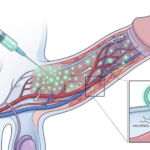
A penile girth filler is an injection of filler gel into the loose tissue between the skin of the penile shaft and the deeper layer that surrounds the erectile bodies (Buck’s fascia). The filler sits outside the erectile tissue (the corpora cavernosa), so when placed in the correct layer it does not interfere with the mechanism of erection.
The aim is to increase the circumference of the shaft, both flaccid and erect. It does not make the penis longer. A filler placed in the glans (the head of the penis) is a different procedure, usually used for premature ejaculation; see glans penis filler for premature ejaculation for that.
For an overview of every enlargement option, including surgery, read penis enlargement: the truth about what works.
Which fillers are used?
The fillers accepted for penile use are all biodegradable: the body gradually breaks them down. Permanent materials have no place in this area.
| Material | Duration | Reversible? | Verdict |
|---|---|---|---|
| Hyaluronic acid (HA) | Usually 12–24 months | Yes, with hyaluronidase | Most widely used and best-tolerated option |
| Poly-L-lactic acid (PLLA) | Can be longer | No | Stimulates your own collagen; nodule risk may be higher than HA |
| Autologous fat grafting | Variable; roughly 40–60% of fat survives at 12 months | No | Partly permanent, but uneven absorption, lumps and asymmetry are common |
| Silicone, PMMA, paraffin, Vaseline | Permanent | Only by surgery | Never acceptable |
Hyaluronic acid is a molecule that occurs naturally in the body and binds water. It has been used in facial aesthetics for decades. For the penis, denser, more cross-linked products are usually chosen than those used in the face, and in larger volumes, typically 20–40 mL. Its most important advantage is that it can be dissolved with hyaluronidase if you are unhappy with the result or a complication develops.
Considering girth filler and want an honest opinion first?
How long does it last?
In most men, an HA girth filler lasts 12 to 24 months. It does not disappear overnight. The body breaks the gel down slowly, so the extra girth fades gradually. Clinical studies have reported that a substantial part of the girth gain is still present 18 months after injection.
The main factors that decide how long your result lasts are:
- Product density: more highly cross-linked gels break down more slowly.
- Volume injected: larger volumes tend to remain noticeable for longer, but every penis has a limit to how much it can safely hold.
- Individual metabolism: some men break filler down faster than others, and this cannot be predicted reliably in advance.
- Movement: the penis changes size and is handled more than the face, so filler may break down a little faster than in facial use.
- Touch-ups: a top-up session before the filler has fully gone helps maintain the result.
Why is it not permanent?
Temporariness is a safety feature, not a flaw. The penis changes shape and size with every erection. A material that the body eventually clears, and that can be dissolved on demand, leaves a way out if anything goes wrong. Permanent materials do not, and their complications usually require surgery.
Is penile girth filler safe?
When a medical-grade HA product is injected by an experienced urologist, into the correct layer, in appropriate volumes and under sterile conditions, girth filler is considered a safe procedure. Published series report low rates of serious complications, and most problems are mild and temporary. As with any medical procedure, there are still risks.
Common, usually temporary side effects
- Swelling (oedema), especially in the first 3–7 days
- Bruising
- Mild pain, tightness or tenderness
- Temporary change in skin sensation
Less common side effects
- Nodules or irregularity: filler collecting in one area. Often improves with massage; otherwise it can be dissolved.
- Migration: filler moving towards the base or the head of the penis.
- Asymmetry: one side appearing fuller. Usually corrected with a touch-up.
- Infection: rare under sterile conditions; signs are increasing redness, pain, discharge or fever.
- Vascular compromise: very rare but important. Correct layer and technique minimise the risk, and HA can be dissolved quickly if it occurs.
Dangerous: permanent and non-medical injections
Injections of liquid silicone, PMMA, paraffin, mineral oil, Vaseline or unlabelled “permanent filler” are a recognised cause of serious, lasting damage. The body walls the material off with inflammation and scar tissue, a condition called sclerosing lipogranuloma. The result is a hard, deformed, sometimes painful penis, skin ulceration, infection and difficulty with intercourse.
These materials cannot be dissolved. Many of these patients need surgical removal of the affected tissue and reconstruction of the penile skin, sometimes in several stages. If you are offered a “permanent” filler, an unusually cheap treatment, or an injection outside a licensed medical clinic, walk away.
Who is a good candidate — and who is not
Girth filler may suit you if you:
- Are bothered by your girth and have realistic expectations
- Prefer a non-surgical, reversible option
- Have normal erectile function
- Have no active infection or skin condition in the genital area
Girth filler is not advisable, or should be delayed, if you:
- Have an active genital infection, warts or skin disease
- Have a bleeding disorder or poorly controlled diabetes
- Have previously had silicone, paraffin or another permanent substance injected
- Have significant curvature; Peyronie’s disease should be assessed first
- Are really concerned about erections; filler does not improve them. See medical causes of erectile dysfunction
- Have size anxiety that dominates daily life (possible body dysmorphic disorder), where counselling should come first
What the procedure involves
- Consultation and measurement. Genital examination, flaccid and stretched measurements, assessment of erectile function, curvature and skin. Expectations are discussed openly, including what filler cannot do.
- Local anaesthesia. A penile nerve block or anaesthetic cream numbs the area. You may feel pressure but not pain.
- Injection. The filler is placed with a fine cannula or needle into the layer under the shaft skin and distributed evenly. The session takes about 30–45 minutes.
- Moulding and discharge. The filler is massaged into an even contour and a light dressing is applied. You go home the same day.
Recovery and aftercare
| Time after filler | What to expect |
|---|---|
| Days 0–2 | Dressing kept on as instructed. Swelling and bruising are normal. Desk work is usually possible the next day. |
| Week 1 | Swelling settles. Avoid heavy exercise, cycling and swimming. Wear supportive, loose underwear. |
| Week 2 | Most men can resume sexual activity and masturbation after about 2 weeks, once tenderness has gone. |
| Weeks 2–4 | Follow-up visit to assess contour and symmetry; a small touch-up can be planned if needed. |
| Months 12–24 | Gradual reabsorption. A top-up session can be discussed if you want to maintain the result. |
Contact your doctor without waiting for follow-up if you notice increasing pain, pale, dusky or white discolouration of the skin, spreading redness, discharge, or a fever above 38 °C.
How it compares with other options
- Fat grafting: uses your own fat and is partly permanent, but absorption is unpredictable, and lumps and asymmetry are more common.
- Pubic liposuction: reduces the fat pad at the base of the penis to increase visible length. It affects apparent length, not girth.
- Dermal grafts and matrix implants: give permanent girth but require general anaesthesia, longer recovery and carry higher risks. See does penis enlargement surgery work?
- Penile prosthesis: not an enlargement procedure; it treats advanced erectile dysfunction. See the penile implants page.
Doctor’s perspective — Op. Dr. Cem İpek
The first conversation about girth filler is usually about measurements. Large studies put the average erect circumference at around 11.5–12 cm, and many men who come to see me are right in that range. For some of them, hearing that is more helpful than any injection.
When we do decide on filler, my rule is simple: it has to be reversible. Hyaluronic acid can be dissolved in minutes if something is not right. I regularly see men who had silicone or paraffin injected elsewhere and now have a hard, deformed penis that needs surgery. Those cases are the reason I never compromise on the material.
When to see a urologist
Book an appointment if:
- You are considering girth filler and want to know whether it suits your anatomy
- You have had filler elsewhere and notice lumps, asymmetry or migration
- You were injected with an unknown or “permanent” substance
- You have curvature, pain or erection problems alongside size concerns
- Concern about size is affecting your relationships or confidence
Thinking about penile girth filler?
Get an honest assessment, medical-grade hyaluronic acid only, and a written follow-up plan at Androaesthe Istanbul.
Request an international patient consultation → · See penis enlargement options →
Frequently asked questions
How long does penile girth filler last?
Hyaluronic acid girth filler usually lasts 12–24 months. The body breaks it down gradually, so girth fades slowly rather than suddenly. Touch-up sessions can maintain the result for longer.
Is penile filler permanent?
Medically recommended penile fillers are not permanent, and that is a safety feature. Substances marketed as permanent, such as silicone, PMMA, paraffin or Vaseline, should never be injected into the penis because they can cause serious, lasting damage.
Is penile girth filler safe?
Medical-grade hyaluronic acid injected by a qualified urologist into the correct layer is considered safe. Most side effects are mild swelling and bruising. Less common problems include lumps, migration and asymmetry, and HA can be dissolved if needed.
Does girth filler affect erections or sensation?
Correctly placed filler sits outside the erectile tissue, so it does not impair erections, and loss of sensation is not expected. It also does not improve erections; erectile problems need separate assessment.
How much girth can a filler add?
Typically about 1.5–3 cm of circumference in a single session, depending on your anatomy and the volume your penis can safely hold.
When can I have sex after penile filler?
Most men can resume sexual activity after about two weeks, once swelling and tenderness have settled. Your doctor will confirm at follow-up.
Can penile filler be removed if I do not like it?
Hyaluronic acid filler can be dissolved with an enzyme called hyaluronidase. This is one of the main reasons it is the preferred penile filler. Poly-L-lactic acid and fat cannot be reversed this way.
Does girth filler make the penis longer?
No. Shaft filler increases circumference, not length. Visible length can sometimes be improved by other means, such as reducing the pubic fat pad.
Op. Dr. Cem İpek, MD
Board-certified urologist and andrologist based in Istanbul, specialising in penile aesthetic procedures, glans filler, erectile dysfunction, penile implant surgery and Peyronie’s disease. He treats international patients at Androaesthe Istanbul.
- Kwak TI et al. The effects of penile girth enhancement using injectable hyaluronic acid gel, a filler. J Sex Med. 2011;8(12):3407–3413.
- Yang DY et al. A comparison between hyaluronic acid and polylactic acid filler injections for temporary penile augmentation in patients with small penis syndrome: a multicenter, patient/evaluator-blinded, comparative, randomized trial. J Sex Med. 2019;16(4):577–585.
- Veale D et al. Am I normal? A systematic review and construction of nomograms for flaccid and erect penis length and circumference in up to 15,521 men. BJU Int. 2015;115(6):978–986.
- Salonia A et al. European Association of Urology Guidelines on Sexual and Reproductive Health — Penile Size Abnormalities and Dysmorphophobia. EAU, 2024.
 EN
 TR
 DE