
SDC vs SDN for Premature Ejaculation: Cryoablation or Neurectomy — Which Is Safer and Does It Last?
Medically reviewed
11 min read
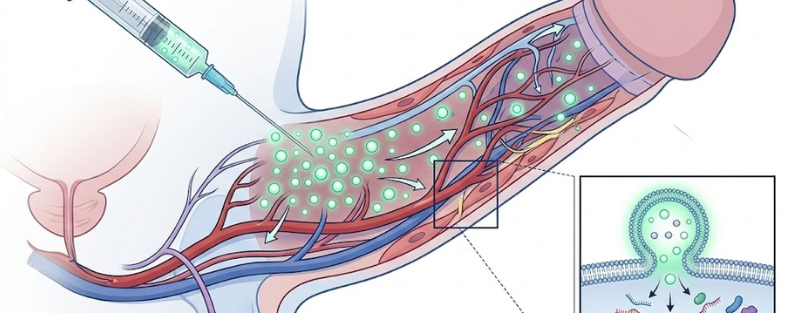
Both procedures aim to reduce the sensitivity of the glans by acting on the dorsal nerves of the penis. Selective dorsal neurectomy (SDN) cuts some of the nerve branches, so its effect is intended to be permanent, and so are its complications, including lasting numbness. Selective dorsal cryoablation (SDC) freezes the nerve branches without cutting them. The nerve's outer sheath survives, so the nerve can regrow and sensation gradually returns. SDC is therefore the safer, reversible option, but its effect may fade over time and repeat treatment can be needed. Neither is a first-line treatment, and international guidelines do not recommend either as routine care. Both should only be considered for men with lifelong premature ejaculation and documented glans hypersensitivity who have not responded to medical therapy.
Men who reach the point of asking about nerve procedures for premature ejaculation have usually tried everything else. Creams that numbed their partner as well as themselves. Dapoxetine that worked one night but not the next. Daily SSRIs they did not want to take for years. The idea of a one-time procedure that “fixes” the problem is understandably attractive.
Two such procedures come up again and again in online searches and clinic advertising: selective dorsal neurectomy (SDN) and selective dorsal cryoablation (SDC). They sound similar and they target the same nerves, but they differ in the one respect that matters more than anything else: whether the damage to the nerve can be undone. This article compares them honestly, including what the evidence does and does not show.
Key takeaways
- Same target, different method. SDN cuts dorsal nerve branches; SDC freezes them.
- Reversibility is the key difference. After SDC the nerve regrows along its preserved sheath. After SDN, cut branches may not reconnect, and permanent numbness is possible.
- SDC is gentler. It is done through small punctures under local anaesthesia, with no incision or stitches, and most men return to normal activity the same day.
- Durability is the open question. Because nerves regenerate, the effect of SDC may lessen over months, and some men need a repeat session.
- Evidence is still limited for both. Guidelines do not recommend nerve procedures as routine treatment. Candidate selection is everything.
- Not for acquired PE. If PE started later in life, the cause is usually something else (erectile dysfunction, prostatitis, thyroid disease, anxiety) and must be treated first.
Why target the dorsal nerves at all?
The dorsal nerve of the penis runs along the top of the shaft and carries touch sensation from the glans. During intercourse, the signals it sends are one of the main triggers of the ejaculatory reflex. Several studies have found that some men with lifelong premature ejaculation have a lower sensory threshold in the glans and faster nerve conduction than men without PE, a pattern often described as glans hypersensitivity.
The logic of nerve procedures follows from this: if the incoming signal is too strong, reduce the number of fibres carrying it and the reflex should take longer to trigger. The dorsal nerve typically divides into several branches, so the idea is to treat some of them while leaving enough intact to preserve normal sensation and orgasm.
The weakness in this logic is that PE is not only a sensory problem. Brain serotonin signalling, anxiety, pelvic floor tone, relationship factors and learned patterns all play a part. That is why no nerve procedure works for every man, and why selection matters so much.
For a definition of lifelong and acquired PE and the full treatment ladder, see premature ejaculation treatment: what actually works.
What is selective dorsal neurectomy (SDN)?
SDN is an open surgical procedure. Through an incision on the shaft or at the circumcision line, the surgeon exposes the dorsal nerve branches and cuts a selected number of them, usually leaving one or two main branches intact. It is often done under regional or general anaesthesia and requires stitches.
SDN was developed and is mostly practised in East Asia, and most of the published data comes from there. Studies report longer ejaculation times in many patients, but they are generally small, short-term and not blinded. The concerns raised by international sexual medicine societies are:
- Permanent numbness of part or all of the glans in some patients
- Reduced sexual pleasure or difficulty reaching orgasm
- Possible effect on erectile function
- Painful nerve endings (neuroma) at the cut site
- No reliable way to reverse the effect if the outcome is unsatisfactory
For these reasons, both the International Society for Sexual Medicine (ISSM) and the European Association of Urology (EAU) guidelines state that surgical nerve interventions should not be offered as routine treatment for PE.
What is selective dorsal cryoablation (SDC)?
SDC applies the same principle using cold instead of a scalpel. A thin cryoprobe is placed next to the selected dorsal nerve branches through small skin punctures, under local anaesthesia. The probe cools the tissue around it to well below freezing for a controlled period.
Freezing a nerve in this way is called cryoneurolysis, and it is a well-established technique in pain medicine, used for knee, chest wall and facial nerve pain. It damages the nerve fibres (axons) but leaves the surrounding connective tissue sheath intact. The fibres beyond the frozen segment stop conducting, and over the following weeks and months new fibres grow back along the preserved sheath, restoring the nerve along its original path.
That is the key to SDC’s safety profile: the reduction in sensitivity is achieved without permanently destroying the nerve. You can read the basics of the procedure in our introduction to selective dorsal cryoablation.
Tried creams and tablets without lasting results?
SDC vs SDN: side-by-side comparison
| SDC (cryoablation) | SDN (neurectomy) | |
|---|---|---|
| What happens to the nerve | Frozen; axons stop conducting, sheath preserved | Selected branches cut |
| Incision | None; small puncture sites | Surgical incision with stitches |
| Anaesthesia | Lokales | Regional or general in most cases |
| Duration | About 20–30 minutes | About 45–90 minutes |
| Return to daily activity | Same day | Several days |
| Return to sexual activity | Usually after about 1–2 weeks | Usually after 3–4 weeks |
| Reversibility | Yes; nerve regenerates | No, or unpredictable |
| Risk of permanent numbness | Low | Significant |
| Durability of effect | May lessen over months; repeatable | Intended to be permanent |
| Evidence base | Early; builds on cryoneurolysis data from pain medicine | Small, mostly short-term studies |
In short, SDN trades safety for permanence, and SDC trades permanence for safety. For most men, and for most surgeons, a reversible option is the more sensible starting point.
Is SDC permanent?
This is the most common question in consultation, and it deserves a straight answer: SDC should not be sold as a guaranteed permanent cure. The same nerve regeneration that makes it safe also means sensitivity can gradually return.
How long the effect lasts varies between men and depends on how many branches were treated, the freezing protocol, and how much of the PE was driven by hypersensitivity in the first place. Some men report lasting improvement, partly because a period of better control breaks the cycle of performance anxiety that keeps PE going. Others notice a gradual return of the old pattern and choose a repeat session.
What SDC can realistically offer is a drug-free period of improved control without the risk of permanent numbness, and the option to repeat it. Be cautious of any clinic that promises a permanent, 100% result from a single session.
Who is a good candidate — and who is not
SDC may be considered if you:
- Have lifelong PE, present since your first sexual experiences
- Have glans hypersensitivity confirmed on examination and, where available, sensory testing
- Have tried behavioural techniques, topical anaesthetics and at least one medication properly, without adequate or acceptable results
- Have normal erectile function
- Understand that the effect may not be permanent and that the evidence is still developing
SDC is not the right choice if you:
- Have acquired PE that began after years of normal control
- Have erectile dysfunction; men who rush to ejaculate before losing the erection need ED treatment, not nerve treatment
- Have chronic prostatitis, thyroid disease or another treatable medical cause
- Have PE only with one partner or in certain situations, which points to a psychological or relational cause
- Already have reduced penile sensation, diabetes with neuropathy, or a bleeding disorder
- Expect a guaranteed permanent result
If you are unsure which type of PE you have, the practical techniques in how to last longer in bed are a useful first step while you arrange an assessment.
What an SDC procedure looks like
- Assessment. Detailed sexual history, an estimate of intravaginal ejaculatory latency time (IELT), PE questionnaires, genital examination and screening for erectile dysfunction, prostatitis and thyroid problems.
- Planning. The dorsal nerve branches are mapped and the number of branches to treat is decided. Expectations, durability and risks are discussed and documented.
- Local anaesthesia. A penile nerve block numbs the area. You are awake throughout.
- Cryoablation. The cryoprobe is placed next to each selected branch and freezing cycles are applied. The procedure takes about 20–30 minutes.
- Discharge. A light dressing is applied and you go home the same day. No stitches are needed.
Recovery week by week
| Time after SDC | What to expect |
|---|---|
| Days 0–3 | Mild swelling, bruising or tenderness at the puncture sites. Simple painkillers are usually enough. Normal daily activity and desk work are fine. |
| Week 1 | Swelling settles. A tingling or slightly numb feeling in the glans is common and expected; it reflects the treated nerve fibres. |
| Weeks 1–2 | Most men can resume sexual activity after about 1–2 weeks, once tenderness has gone. Many notice a change in control within this period. |
| Weeks 4–8 | Sensation stabilises. Follow-up visit to assess ejaculation time and satisfaction. |
| Following months | Gradual nerve regeneration. Sensitivity may partly return; repeat treatment can be discussed if control declines. |
Follow the specific instructions you receive after your procedure, as protocols vary between patients.
Risks and side effects
SDC is minimally invasive, but it is still a medical procedure. Possible side effects include:
- Swelling and bruising at the treated area, usually resolving within days
- Temporary numbness, tingling or altered sensation in the glans, usually improving as the nerve recovers
- Too little effect, particularly if PE has a strong psychological or central component
- Cold injury to the skin at the probe site, which is rare with proper technique
- Infection, which is uncommon
- Delayed orgasm or reduced pleasure, which is uncommon and generally temporary
Seek advice promptly if you develop increasing pain, spreading redness, discharge, fever, or blistering of the skin after the procedure.
Alternatives to try first
Nerve procedures sit at the top of the treatment ladder, not the bottom. Before considering SDC, most men should have tried:
- Behavioural techniques (stop-start, squeeze) and pelvic floor training
- Topical anaesthetic sprays or creams (lidocaine–prilocaine), used correctly
- Dapoxetine on demand, or an off-label daily SSRI
- Combination therapy, which often works better than any single treatment
- Hyaluronic acid glans filler, another reversible way to reduce glans sensitivity, which also adds some glans volume
Filler and SDC act in different ways: the filler adds a cushioning layer between the skin surface and the nerve endings, while SDC reduces conduction in the nerve itself. For some men the choice between them is a matter of preference; for others the examination findings favour one approach.
Doctor’s perspective — Op. Dr. Cem İpek
When a young, healthy man asks me for a procedure on the nerves of his penis, the first question I ask myself is: if this goes wrong, can it be undone? With cryoablation the answer is yes. With neurectomy it may be no. That single difference is why I favour the reversible approach.
The most important part of SDC happens before the procedure. Many men who come asking for it have acquired PE, unrecognised erectile dysfunction, or a medication that was never tried properly. Treating those is simpler, cheaper and more effective. SDC is for the smaller group with genuine lifelong PE and a sensitive glans who have exhausted the standard options.
I also tell every patient honestly that the effect may soften with time. Men handle that far better when they hear it before the procedure rather than after.
When to see a urologist
Book an appointment if:
- You have had PE since your first sexual experiences and it causes distress
- Creams, dapoxetine or SSRIs have not worked or caused side effects you cannot accept
- You are considering SDC, SDN or glans filler and want an independent opinion
- Your PE started later in life, which needs a medical cause ruled out
- You also have difficulty getting or keeping an erection
Related reading: premature ejaculation treatment options compared.
Looking for a drug-free option for premature ejaculation?
Get a full assessment, honest guidance on whether SDC suits you, and a written follow-up plan at Androaesthe Istanbul.
Request an international patient consultation → · See the SDC treatment page →
Frequently asked questions
What is the difference between SDC and SDN?
Both reduce glans sensitivity by acting on the dorsal nerves of the penis. SDN cuts selected nerve branches surgically, which is intended to be permanent but can cause permanent numbness. SDC freezes the branches without cutting them, so the nerve can regenerate and the effect is reversible.
Is selective dorsal cryoablation permanent?
Not necessarily. Because the frozen nerve regrows along its preserved sheath, sensitivity can gradually return over months. Some men keep a lasting benefit, while others choose a repeat session. SDC should not be presented as a guaranteed permanent cure.
Is SDC painful?
It is performed under local anaesthesia, so the procedure itself is not painful. Mild tenderness, swelling or bruising for a few days afterwards is common and usually controlled with simple painkillers.
Can SDC cause permanent numbness or erectile dysfunction?
The risk of permanent numbness is low because the nerve is not cut and regenerates. Temporary tingling or reduced sensation is common in the first weeks. SDC does not act on the nerves or blood vessels responsible for erection.
When can I have sex after SDC?
Most men can resume sexual activity after about one to two weeks, once any tenderness at the treatment sites has settled. Your doctor will confirm the timing at follow-up.
Who should not have SDC?
Men with acquired PE, erectile dysfunction, chronic prostatitis, thyroid disease, existing reduced penile sensation, diabetic neuropathy or a bleeding disorder, and anyone expecting a guaranteed permanent result. These men usually benefit more from other treatments.
Is SDC better than glans filler for premature ejaculation?
Neither is universally better. Filler cushions the nerve endings and adds glans volume; SDC reduces conduction in the nerve itself. Both are reversible. The choice depends on examination findings and personal preference.
Op. Dr. Cem İpek, MD
Board-certified urologist and andrologist based in Istanbul, specialising in premature ejaculation, erectile dysfunction, glans filler, penile implant surgery and male genital aesthetic surgery. He treats international patients at Androaesthe Istanbul.
- Serefoglu EC et al. An evidence-based unified definition of lifelong and acquired premature ejaculation: report of the second International Society for Sexual Medicine Ad Hoc Committee. J Sex Med. 2014;11(6):1423–1441.
- Althof SE et al. An update of the International Society of Sexual Medicine’s guidelines for the diagnosis and treatment of premature ejaculation. J Sex Med. 2014;11(6):1392–1422.
- Salonia A et al. European Association of Urology Guidelines on Sexual and Reproductive Health — Disorders of Ejaculation. EAU, 2024.
- Waldinger MD et al. A multinational population survey of intravaginal ejaculation latency time. J Sex Med. 2005;2(4):492–497.
- Zhang GX et al. Selective resection of dorsal nerves of penis for premature ejaculation. Int J Androl. 2012;35(6):873–879.
- Trescot AM. Cryoanalgesia in interventional pain management. Pain Physician. 2003;6(3):345–360.
- Ilfeld BM, Finneran JJ. Cryoneurolysis and percutaneous peripheral nerve stimulation to treat acute pain. Anesthesiology. 2020;133(5):1127–1149.


 DE
DE  EN
EN  TR
TR