
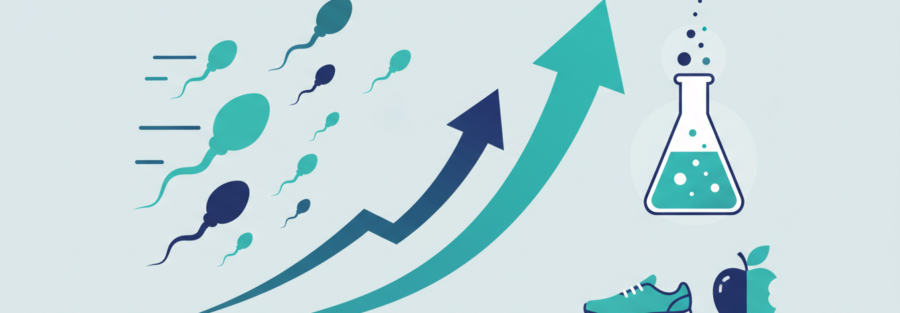
Low Sperm Count (Oligozoospermia): Causes and Treatment
Low sperm count — oligozoospermia — is defined by WHO 2021 as a sperm concentration below 16 million per millilitre (previous 5th edition threshold was 15 million/mL) or a total sperm number below 39 million per ejaculate. It is often correctable. Depending on the cause, treatment ranges from lifestyle change and antioxidants to varicocele repair, hormonal therapy (clomiphene, hCG, hMG), and — for severe cases — ICSI. MicroTESE is reserved for men with azoospermia.
A single semen analysis with a low count is usually not a diagnosis — it is a starting point. Sperm production is a 74-day process, and numbers naturally fluctuate with illness, fever, medication, stress, and abstinence interval. Yet when the pattern is confirmed on repeat testing, most cases of oligozoospermia are treatable, and many couples move from “we need IVF” to “we might conceive naturally.”
This guide, written by a practising Istanbul urologist and andrologist, explains WHO thresholds, the realistic causes behind low sperm count, and the full ladder of treatment — from what you can change tomorrow to what advanced surgery can offer when the numbers are near zero.
Key takeaways
- WHO 2021 (6th ed) lower limit: 16 million sperm/mL (previous 15 million/mL) or 39 million total per ejaculate.
- These are population-based reference limits, not fertility guarantees or hard failure lines.
- Common reversible drivers: varicocele, obesity, smoking, alcohol, exogenous testosterone / anabolic steroids, scrotal heat.
- Medical therapy (clomiphene, hCG, hMG) works best when the problem is endocrine.
- Antioxidants (CoQ10, L-carnitine, zinc, folate, vitamin C, vitamin D) can modestly improve semen over 3–6 months.
- Microsurgical varicocele repair improves semen in 60–70% of eligible men.
- ICSI can achieve pregnancy with very few sperm. MicroTESE is for azoospermia.
Definition and WHO 2021 thresholds
Oligozoospermia is defined by the WHO 2021 laboratory manual (6th edition) as sperm concentration below the 5th centile of fertile men: 16 million sperm per millilitre. The previous 5th edition (2010) used 15 million/mL — a small revision reflecting an updated fertile reference population.
The full staircase of options — from tablets to injections to prosthesis — is mapped on our erectile dysfunction treatment overview.
Other relevant reference limits from WHO 2021:
- Semen volume ≥ 1.4 mL
- Total sperm number ≥ 39 million per ejaculate
- Progressive motility ≥ 30%
- Normal morphology ≥ 4% (strict Kruger)
- Vitality ≥ 54%
These are reference limits, not absolute cut-offs for fertility. Men below cutoff can conceive; men above cutoff can be subfertile. Combined evaluation of the couple is essential.
Mild, moderate, severe oligozoospermia
Clinicians often stratify severity as:
A non-drug option that some men trial first is low-intensity shockwave therapy for ED.
| Category | Sperm concentration |
|---|---|
| Mild oligozoospermia | 10–16 million/mL |
| Moderate | 5–10 million/mL |
| Severe | <5 million/mL |
| Cryptozoospermia | Sperm found only after centrifugation |
| Azoospermia | No sperm found even after centrifugation |
Severity matters because it guides testing (severe oligo triggers genetic testing) and treatment selection (IUI is a reasonable path only when the total motile sperm count exceeds ~5–10 million).
Causes of low sperm count
Grouped by mechanism:
Regenerative medicine adds a further tier: stem cell therapy for erectile dysfunction.
- Varikozele — the single most common surgically correctable cause
- Endocrine — hypogonadotropic hypogonadism, hyperprolactinaemia, thyroid disease, exogenous testosterone / anabolic steroid use
- Genetic — Klinefelter (47,XXY), Y-chromosome microdeletions, CFTR mutations
- Testicular — cryptorchidism history, prior torsion, prior mumps orchitis, chemotherapy, radiation
- Infection — epididymo-orchitis, prostatitis, chronic genitourinary infection
- Obstruction (partial) — ejaculatory duct obstruction, seminal vesicle pathology
- Lifestyle — obesity, smoking, heavy alcohol, cannabis, opioid use, chronic sleep deprivation
- Environmental — scrotal heat (sauna, laptop, tight underwear), pesticides, solvents, heavy metals
- Medications — testosterone (biggest culprit), SSRIs, calcium-channel blockers, sulfasalazine, chemotherapy
- Idiopathic — after full workup, ~25% remain unexplained
Workup — what your doctor should order
Confirming oligozoospermia and finding the cause requires:
The newer, cell-free regenerative sibling of stem cell work is exosome therapy for erectile dysfunction.
- Two semen analyses at least 2–3 weeks apart, after 2–7 days of ejaculatory abstinence
- Hormone panel — FSH, LH, total testosterone (early morning, fasted), prolactin, oestradiol, TSH
- Scrotal Doppler ultrasound — varicocele, testicular volume, tumour screening
- Transrectal ultrasound — only if low volume < 1.5 mL with normal testes and normal FSH, to look for ejaculatory duct obstruction
- Karyotype and Y-microdeletion — indicated for sperm concentration <5 million/mL
- Sperm DNA fragmentation — selectively; useful in recurrent pregnancy loss or failed IVF/ICSI
- Post-ejaculate urinalysis — if very low volume, to rule out retrograde ejaculation
Lifestyle changes that actually move the needle
These are not “wellness advice” — they are evidence-backed interventions that can measurably shift semen parameters over 3–6 months (one full spermatogenic cycle):
- Weight loss. Every 5 kg lost in overweight men can meaningfully raise testosterone and improve semen. Obesity increases aromatisation of testosterone to oestradiol.
- Smoking cessation. Smoking reduces concentration and motility and doubles DNA fragmentation. Improvement is seen within 3–6 months of quitting.
- Alcohol reduction. Keep to ≤ 14 units per week; heavy drinking damages Leydig cells.
- Stop cannabis. Regular use lowers concentration and disrupts sperm morphology.
- Sleep 7–8 hours. Testosterone is largely produced during REM; chronic short sleep flattens the curve.
- Avoid scrotal heat. Long hot baths, saunas, laptops on the lap, and heated seats increase scrotal temperature.
- Regular moderate exercise. 150 minutes per week of aerobic activity improves multiple parameters; extreme endurance training can be counterproductive.
- Treat sleep apnoea. CPAP restores nocturnal testosterone and improves multiple andrological outcomes.
Antioxidants and supplements
Oxidative stress is a major driver of poor semen quality. Meta-analyses (Cochrane 2019; Salas-Huetos 2018) show modest but real improvements from targeted antioxidant therapy, particularly in men with elevated DNA fragmentation. The most-studied agents:
Anatomical length or girth is a separate procedure — details on our penis enlargement surgery page.
| Supplement | Typical daily dose | Rationale |
|---|---|---|
| Coenzyme Q10 | 200 mg | Mitochondrial energy, motility |
| L-carnitine | 2 g | Sperm energy metabolism, motility |
| L-acetyl-carnitine | 1 g | Adjunct to L-carnitine |
| Zinc | 15–30 mg | Testicular enzyme cofactor, testosterone support |
| Folate (folic acid) | 400–800 µg | DNA synthesis, sperm maturation |
| Vitamin C | 500 mg | Antioxidant, protects sperm DNA |
| Vitamin E | 200–400 IU | Antioxidant, membrane protection |
| Vitamin D | If deficient, correct to >30 ng/mL | Testicular function, testosterone |
| Selenium | 55–100 µg | Antioxidant enzymes, motility |
| N-acetylcysteine | 600 mg | Antioxidant, glutathione precursor |
A combined multi-nutrient formulation for 3–6 months is more realistic than taking single agents. Expect modest improvement, not miracles.
Varicocele repair
If a palpable varicocele is present alongside abnormal semen and infertility, microsurgical subinguinal varicocelectomy is the reference intervention. Meta-analyses show:
The full diagnostic workup is in male infertility: causes and tests.
- Semen improvement in ~60–70% of treated men
- Spontaneous pregnancy rate of ~35–45% within 12 months (vs ~15% untreated)
- Mean testosterone rise of ~80–100 ng/dL in men with baseline low-normal levels
- Sperm return in about 20–35% of selected men with non-obstructive azoospermia
Semen changes emerge gradually because a full spermatogenic cycle takes 74 days; expect meaningful data at 3 and 6 months post-op.
Diagnosed with a varicocele and low sperm count?
Hormonal treatment (clomiphene, hCG, hMG, letrozole)
Hormonal therapy works best in men with an identifiable endocrine derangement:
A common, surgically-treatable cause is discussed in varicocele symptoms and treatment.
- Clomiphene citrate (25–50 mg on alternate days) — a selective oestrogen receptor modulator that raises endogenous FSH, LH, and testosterone. Useful in idiopathic oligozoospermia with low-normal testosterone and normal-to-low LH. Typically improves testosterone by 100–200 ng/dL.
- hCG (1,500–3,000 IU 2–3× weekly) — mimics LH, drives Leydig cell testosterone production. Used in hypogonadotropic hypogonadism and to restart the axis after exogenous testosterone.
- hMG or recombinant FSH (75–150 IU 2–3× weekly) — added when FSH stimulation is needed for spermatogenesis, especially in hypogonadotropic hypogonadism where full sperm production requires both hCG and FSH.
- Letrozole or anastrozole — aromatase inhibitors, reserved for obese men with high oestradiol and a low testosterone-to-oestradiol ratio.
- Cabergoline — for hyperprolactinaemia driving hypogonadism.
Do not use exogenous testosterone to treat infertility. It is the fastest way to zero sperm count and can suppress production for 6–18 months after cessation.
Recovery after stopping testosterone or steroids
Increasingly, otherwise-healthy men in their 20s–40s present with azoospermia or severe oligozoospermia after exogenous testosterone, SARMs, or anabolic steroid use. The recovery protocol typically involves:
- Stopping all exogenous androgens immediately
- hCG 1,500–3,000 IU 2–3× weekly to reactivate Leydig cells
- Clomiphene 25 mg on alternate days to restart pituitary drive
- Sometimes hMG or FSH added when spermatogenesis fails to restart
- Serial semen analysis every 3 months
Most men recover measurable sperm by 6–12 months. A minority never fully recover baseline production, particularly after prolonged (>3 year) high-dose cycles.
Assisted reproduction — IUI, IVF, ICSI
When medical and surgical treatment does not produce enough sperm for natural conception:
For a topline summary, read common causes of male infertility.
| Technique | Typical minimum sperm requirement | When considered |
|---|---|---|
| Timed intercourse | Total motile count > 20 million | Mild abnormalities |
| IUI (intrauterine insemination) | Total motile count > 5–10 million post-wash | Mild-to-moderate oligo/astheno; unexplained |
| IVF (conventional) | Total motile count > 500,000 | Moderate male factor + normal tubal function |
| ICSI | Even a handful of live sperm | Severe oligo, cryptozoospermia, retrieval from testis |
ICSI is the equaliser: as long as sperm are alive and motile (even barely), fertilisation is achievable. But ICSI does not fix DNA damage — which is why upstream treatment of varicocele, infection, or oxidative stress still matters even when ICSI is planned.
TESE and microTESE for azoospermia
When no sperm at all appear in the ejaculate:
The mental-health side is under-discussed — see the emotional impact of male infertility.
- Obstructive azoospermia (normal FSH, normal testicular volume): sperm are retrieved almost universally by PESA (percutaneous epididymal sperm aspiration), MESA (microsurgical epididymal), or TESA (testicular aspiration).
- Non-obstructive azoospermia (high FSH, small testes): microTESE is the gold standard, retrieving sperm in about 40–60% overall and ~40–50% even in Klinefelter syndrome when performed by an experienced microsurgeon.
Retrieved sperm are used with ICSI. Cryopreservation of retrieved sperm allows multiple ICSI cycles from a single retrieval.
Realistic timeline and outcomes
- Months 0–3: confirm diagnosis with repeat semen analysis, complete workup, start lifestyle interventions, treat obvious drivers (stop testosterone, treat infection, start antioxidants)
- Months 3–6: reassess semen; consider varicocele repair or hormonal therapy if indicated
- Months 6–12: full effect of interventions visible; decide on natural conception vs IUI vs IVF
- Month 12+: if pregnancy has not occurred and semen remains suboptimal, escalate to IVF/ICSI
Female-partner age is the overriding time constraint. If she is over 35, timelines compress significantly and thresholds for moving to ICSI drop.
If a diagnosis is missing, start with the 12 medical causes of erectile dysfunction.
Ready to address low sperm count?
Get a complete andrology workup — semen analysis, hormone panel, Doppler ultrasound, and (where indicated) genetic testing — at our Istanbul clinic.
Doctor’s perspective — Op. Dr. Cem İpek
A patient never sees his own testicles under a microscope, so numbers on a semen report often feel abstract and hopeless. My job is to translate them into a plan: what is the mechanism, what can we reverse, what needs surgery, and where does IVF fit. In most cases the plan is optimistic.
The largest hidden cause of low sperm count in men under 40 today is exogenous testosterone — either prescribed casually by a wellness clinic or bought online. Many men do not connect the dots. When we stop it and restart the axis with hCG and clomiphene, most recover sperm within a year, but the wait is agonising for a couple already trying to conceive.
ICSI has been a genuine revolution — we can now achieve pregnancy with a single live sperm. But it should not become the default first move. Fixing the underlying andrological problem often lets a couple avoid IVF entirely, and even when it does not, treating the man improves ICSI outcomes and embryo quality.
When to see a urologist
Book an appointment if any of the following applies:
- Any abnormal semen analysis, even a single one
- Trying to conceive for > 12 months (> 6 months if partner is > 35)
- Current or past use of testosterone, SARMs, or anabolic steroids
- History of undescended testis, torsion, mumps orchitis, chemotherapy, or radiotherapy
- Palpable varicocele or asymmetric testicular size
- Low libido, small testes, or gynaecomastia
- Recurrent early pregnancy loss
- Failed IUI or IVF/ICSI cycles
Frequently asked questions
What is considered a low sperm count?
By WHO 2021 (6th edition) criteria, a sperm concentration below 16 million per millilitre, or a total sperm number below 39 million per ejaculate, is below the reference limit. The previous 5th edition threshold was 15 million/mL. These are population percentiles, not fertility guarantees.
Can a low sperm count be increased naturally?
Often yes. Weight loss, smoking cessation, alcohol reduction, avoidance of scrotal heat, stopping exogenous testosterone or steroids, treating sleep apnoea, and a targeted antioxidant regimen can measurably improve semen over 3–6 months — the length of one spermatogenic cycle.
How long does it take for sperm count to improve?
Spermatogenesis takes about 74 days plus 2–3 weeks of epididymal transit. Any intervention needs at least 3 months to be reflected on a semen analysis, with maximum improvement usually at 6–12 months.
Can I get my partner pregnant with a low sperm count?
Yes, though probability drops with severity. Many men with mild oligozoospermia conceive naturally with time. Moderate cases may benefit from IUI. Severe oligozoospermia typically requires ICSI, which can succeed with a small number of live sperm.
Do supplements really improve sperm count?
Meta-analyses show modest but real improvements in concentration, motility, and DNA fragmentation with antioxidant therapy (CoQ10, L-carnitine, zinc, folate, vitamins C, D, E, selenium). Expect useful support, not dramatic transformation.
Does testosterone therapy increase sperm count?
No — the opposite. Exogenous testosterone suppresses pituitary FSH and LH and shuts down endogenous sperm production. It is the fastest route to azoospermia. Men wishing to preserve fertility should use clomiphene or hCG instead.
What is the difference between oligozoospermia and azoospermia?
Oligozoospermia is low sperm concentration (below 16 million/mL). Azoospermia is complete absence of sperm in the ejaculate after centrifugation. Treatment paths diverge significantly — azoospermia requires distinguishing obstructive from non-obstructive causes and often involves microTESE + ICSI.
Can varicocele surgery fix low sperm count?
In men with palpable varicocele and abnormal semen, microsurgical varicocelectomy improves semen parameters in 60–70% and raises spontaneous pregnancy rates from ~15% to ~35–45% within 12 months. It is the most effective single intervention when a varicocele is present.
- World Health Organization. WHO Laboratory Manual for the Examination and Processing of Human Semen, 6th edition, 2021.
- European Association of Urology (EAU) Guidelines on Sexual and Reproductive Health, 2024 edition — Male Infertility.
- American Urological Association (AUA) / American Society for Reproductive Medicine (ASRM). Diagnosis and Treatment of Infertility in Men: AUA/ASRM Guideline, 2021.
- Smits RM et al. Antioxidants for male subfertility. Cochrane Database Syst Rev. PMID: 30866036.
- Salas-Huetos A et al. The effect of nutrients and dietary supplements on sperm quality parameters: a systematic review. Adv Nutr. PMID: 29546251.
- Chua ME et al. Clomiphene citrate for idiopathic oligoasthenoteratozoospermia: a meta-analysis. Andrology. PMID: 23606465.
- Persad E et al. Surgical or radiological treatment for varicoceles in subfertile men. Cochrane Database Syst Rev. PMID: 33630341.


 DE
DE  EN
EN  TR
TR